
PC Build for AI & Machine Learning: GPU & RAM Specifications
R
Written by: Rohan Malhotra
Custom PC Architect · Published on 9 June 2026
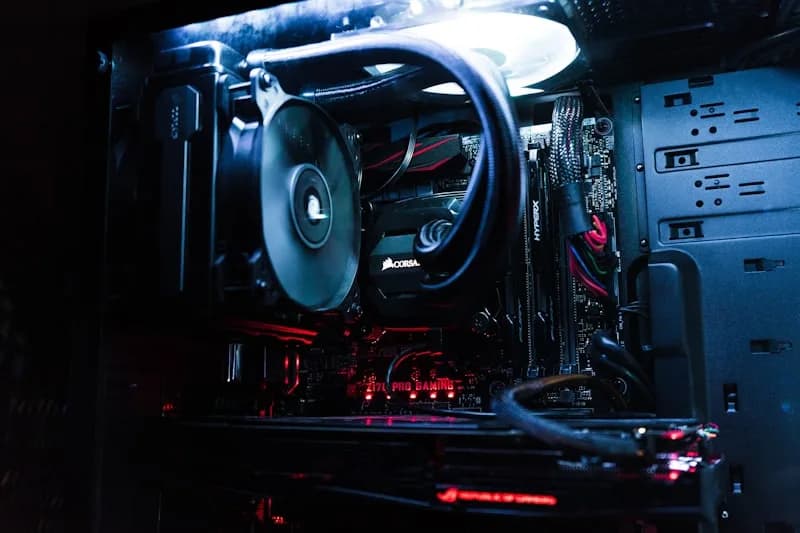
Developing artificial intelligence, training deep learning neural networks, and running local Large Language Models (LLMs) requires specialized hardware. A standard office PC will fail under PyTorch/TensorFlow training loops.
🧠 1. The GPU: VRAM is King
For AI workloads, the Graphics Processing Unit (GPU) is the single most critical component.
- CUDA Cores: NVIDIA is mandatory due to CUDA software ecosystem dominance. AMD GPUs are not native choices for AI.
- Tensor Cores: Accelerate matrix calculations.
- VRAM Size: Large model weights must fit entirely in GPU memory. A minimum of 12 GB VRAM (like RTX 3060/4070) is required for entry-level work. For serious training, target 16 GB VRAM (RTX 4070 Ti Super/RTX 4080) or 24 GB VRAM (RTX 4090).
💾 2. System RAM & Storage Requirements
- System Memory (RAM): Pick at least 32GB or 64GB DDR5 memory. The datasets are loaded into RAM before being batch-processed by the GPU.
- High-Speed Storage: SSDs are mandatory. Datasets consist of millions of small files; a Gen4 NVMe SSD with fast random read speeds prevents CPU feed bottlenecks.
Accelerate your AI projects. View our high-performance AI Workstations.